http://environment.yale.edu/storytelling/
In today’s interconnected world, it is no longer enough for scientists to simply publish their findings in academic journals. Writers, artists, photographers, filmmakers and other storytellers are increasingly seen as essential collaborators in scientific exploration. These storytellers help explain not only how scientific research is conducted but, critically, what it means for society.
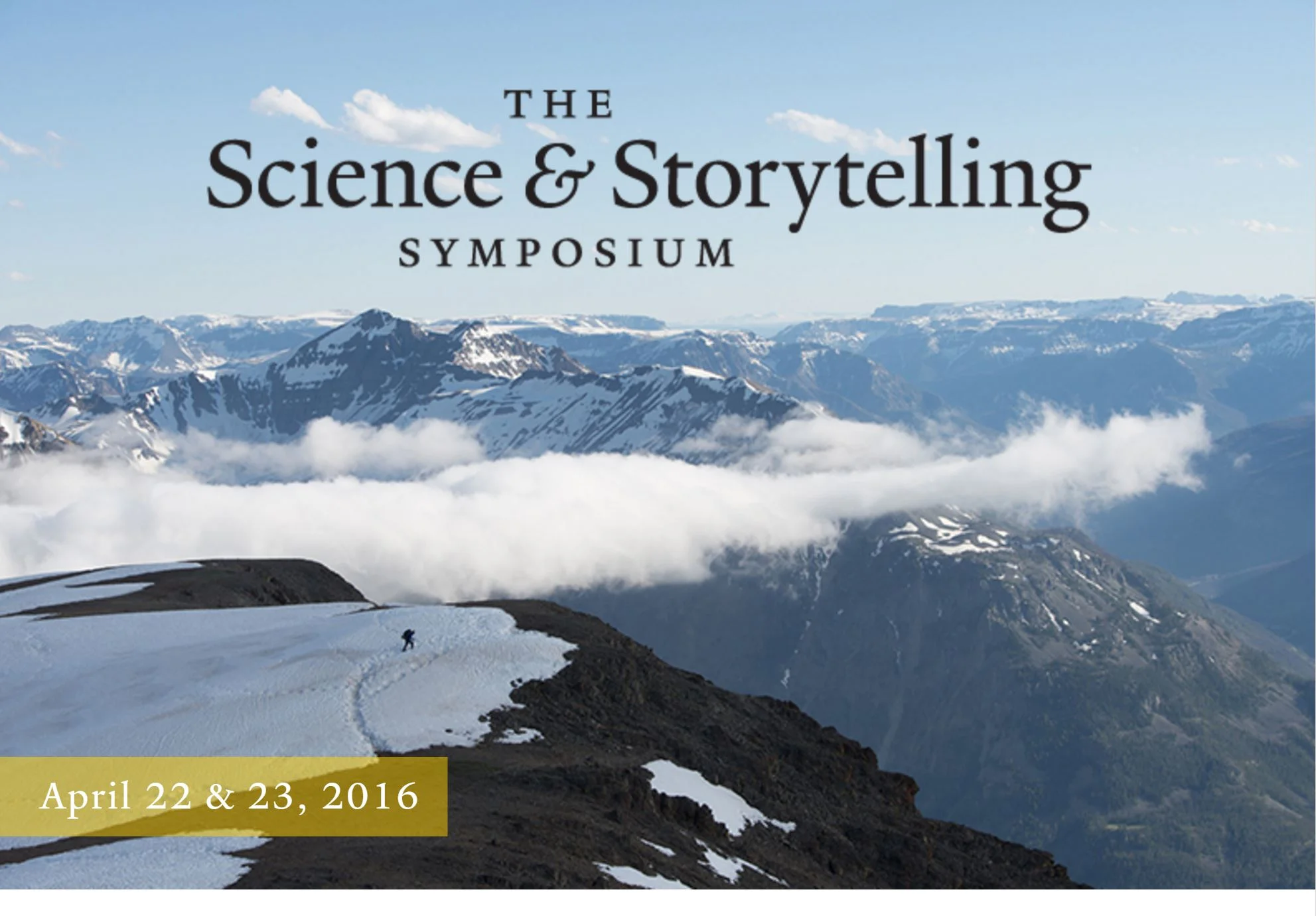
Join us for the Science & Storytelling Symposium, an interdisciplinary event hosted by the Yale School of Forestry & Environmental Studies on April 22-23, 2016.
- 8:30 AMWelcome Address
Jamie Shreeve Deputy Editor in Chief, National Geographic
- 9:00 AMFraming Perceptions:
Artistic Representations of NatureLong collaborators in scientific exploration, artists both reflect and influence our cultural perceptions of nature. But how do such collaborations really work? What should be the role of the artist in scientific inquiry? And how can artists help promote richer understandings of the natural world and our place in it?
- James Prosek Artist
- Jennifer Raab Assistant Professor, Yale Department of History of Art
- Marty Schnure Founder and Art Director, Maps for Good
Moderated by Jock Reynolds Director, Yale University Art Gallery
- 10:30 AM
Break
- 11:00 AMMorality and Meaning in a Contested Landscape
In the Greater Yellowstone Ecosystem, clashes over wildlife, energy, and land use create stories that are often difficult to unpack and understand. What are some of the underlying causes of these conflicts, and how do storytellers dissect and explain not only what is happening, but also why and what it means for society?
- Justin Farrell Assistant Professor, Yale School of Forestry & Environmental Studies
- Stephanie Paige Ogburn `07 MESC Freelance Journalist
- Jenny Nichols Filmmaker; Principal, Pongo Media
Moderated by Fred Strebeigh Senior Lecturer, Yale School of Forestry & Environmental Studies
- 12:30
Lunch
- 1:30Making Science Accessible Through Storytelling
There is an increasing realization that stories — not just data — are essential to communicating scientific research. But in a world inundated with stories, how can scientists make their work both heard and relevant to diverse audiences?
- Carl Zimmer Columnist, New York Times
- Gary Machlis `79 PhD Science Advisor to the Director, National Park Service
- Gregory McGruder Vice President for Public Programs, National Geographic
Moderated by David Skelly Oastler Professor of Ecology, Yale School of Forestry & Environmental Studies; Director, Yale Peabody Museum of Natural History
- 3:00
Break
- 3:30Plenary - Greater Yellowstone Migrations
- Arthur Middleton `07 MEM Associate Research Scientist, Yale School of Forestry & Environmental Studies
- Joe Riis Wildlife Photojournalist, National Geographic
Introduction by Oswald Schmitz Oastler Professor of Population and Community Ecology, Yale School of Forestry & Environmental Studies; Director, Yale Institute for Biospheric Studies
- 4:45
Break
- 5:00Keynote Address
David Quammen Contributing Writer, National Geographic